Understanding Soil Reactivity in Melbourne’s Residential Developments!
When planning a residential development in Melbourne, it’s easy to focus on architectural design, council approvals, or construction timelines. But one of the most critical—and often overlooked—factors lies underground: soil reactivity.
At Oz Geos, we’ve seen firsthand how reactive soils impact homes across Melbourne and regional Victoria. Understanding soil reactivity is essential for safe, compliant, and cost-effective construction. Here’s what you need to know.
What is Soil Reactivity?
Soil reactivity refers to how much a soil type expands or contracts with changes in moisture content. In reactive soils—especially clay—moisture variation can cause significant ground movement, affecting the stability of footings, slabs, and structures.
Why It Matters in Melbourne
Many suburbs across Melbourne, particularly in the north, west, and outer growth corridors, are built on highly reactive clay soils. Without proper assessment and engineering, these conditions can lead to:
- Slab heave or settlement
- Cracking in walls and driveways
- Uneven flooring and door misalignment
- Costly structural repairs over time
How Soil Reactivity is Classified
Under the Australian Standard AS 2870, soil is classified based on its reactivity as:
- Class A – Non-reactive
- Class S – Slightly reactive
- Class M – Moderately reactive
- Class H1/H2 – Highly reactive
- Class E – Extremely reactive
- Class P – Problematic (e.g. soft soils, fill, or landslip-prone areas)
How Do You Know Your Site’s Soil Class?
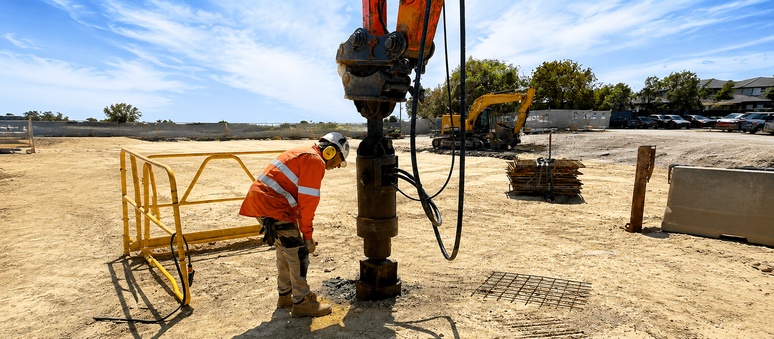
The only way to know for sure is to engage a qualified geotechnical engineer for a site classification investigation. At Oz Geos, we conduct thorough soil testing and borehole investigations, providing clear reports that comply with AS 2870 and are ready for use in design and council approvals.
Designing Foundations for Reactive Soils
Once the soil class is known, the footing and slab design must be tailored accordingly. For highly reactive soils, common solutions include:
- Waffle slabs with reinforcement to absorb movement
- Deepened edge beams or piers to reach stable soil strata
- Moisture control systems (e.g. drainage, landscaping) to minimise seasonal soil change
- Articulation joints in brickwork and walls
Working with both geotechnical and structural engineers ensures these designs are optimised for safety, longevity, and compliance.
Tips for Managing Reactive Soil Sites
Even after construction, maintenance plays a role in preventing soil-related damage. Here are some best practices:
- Maintain consistent moisture levels around the house perimeter
- Avoid over-watering gardens near footings
- Ensure roof drainage and stormwater systems direct water away from the foundation
- Use proper landscaping to prevent water pooling or erosion
Why Choose Oz Geos?
At Oz Geos, we’re experts in Melbourne’s geotechnical landscape. With hundreds of soil tests and site classifications completed across Victoria, we offer:
- Fast and accurate soil reports
- Council-compliant documentation
- Expert recommendations for footing and slab design
- Support for builders, developers, architects, and homeowners
Whether you’re building a new home or extending an existing structure, we provide reliable geotechnical insights to build with confidence.