Regulatory Frameworks and Standards for Geotechnical Design in Australia!
Navigating AS 1726, AS 2870, and Other Key Guidelines for Safe and Compliant Projects
Geotechnical engineering is a foundational element of civil construction in Australia, influencing everything from residential slabs to major infrastructure. But delivering safe, efficient, and legally compliant designs isn’t just about soil testing and calculations — it’s about understanding and following the national regulatory frameworks and standards that govern the practice.
At OzGeos, we work closely with developers, engineers, councils, and architects to ensure that every geotechnical investigation and design aligns with the relevant Australian Standards. In this blog, we break down the core standards that shape the way geotechnical work is carried out across the country.
Why Standards Matter in Geotechnical Engineering
Australian Standards provide a common framework for:
- Ensuring public safety and structural reliability
- Managing site risks like settlement, landslides, and reactive soils
- Supporting planning approvals and regulatory compliance
- Promoting consistency across engineering disciplines
Failing to comply with these standards can result in unsafe construction, legal liability, and costly rework.
Key Standards Governing Geotechnical Design in Australia
1. AS 1726 – Geotechnical Site Investigations
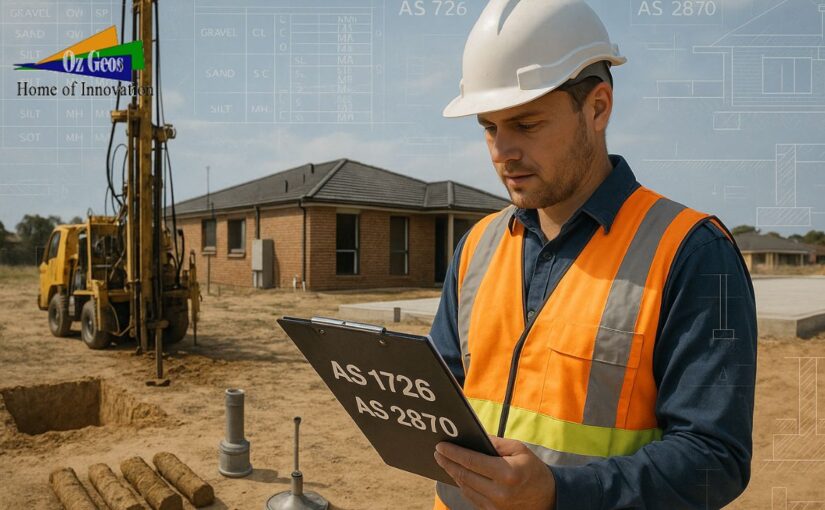
This is the principal standard for conducting geotechnical investigations in Australia. It outlines:
- Site investigation planning
- Sampling methods (boreholes, test pits, etc.)
- Laboratory testing procedures
- Reporting requirements
- Classification of soils and rocks
Why it matters:
AS 1726 ensures that site conditions are properly characterised before design begins — reducing the risk of unexpected ground behaviour during or after construction.
2. AS 2870 – Residential Slabs and Footings
AS 2870 is specific to residential development and is used to design footing systems on reactive soils. It provides:
- Soil classification systems (e.g., Class A, S, M, H1, H2, E, P)
- Guidelines for managing soil reactivity and moisture changes
- Design rules for slabs, strip footings, and stiffened rafts
- Site preparation and drainage considerations
Why it matters:
This standard is mandatory for all new homes and units. Compliance ensures slab designs are tailored to soil behaviour — especially in areas prone to ground movement.
3. AS 2159 – Piling – Design and Installation
This standard covers the geotechnical aspects of pile foundations, including:
- Load carrying capacity of different pile types
- Construction tolerances and testing
- Soil-pile interaction
- Corrosion and durability considerations
Why it matters:
For medium to large-scale projects involving deep foundations, AS 2159 ensures piles are designed and installed safely, based on reliable ground data.
4. AS 3798 – Guidelines on Earthworks for Commercial and Residential Developments
This standard outlines procedures for controlled fill, including:
- Fill placement, compaction, and testing
- Site preparation and topsoil stripping
- Tolerances and verification procedures
- Suitable material types
Why it matters:
Ensures that engineered fill supports future structures without undue settlement or instability.
5. AS 1170 – Structural Design Actions (Particularly Wind and Earthquake Loads)
While not a geotechnical standard per se, AS 1170 (particularly Part 4) is often used alongside geotechnical inputs to:
- Design foundations for seismic and wind loading
- Understand how soil properties influence building response
Why it matters:
Geotechnical engineers often provide site classification for seismic and wind load analysis under this code.
Working Within Planning and Environmental Frameworks
In addition to Australian Standards, geotechnical work must comply with state and local government planning controls, such as:
- Erosion Management Overlays (EMOs)
- Landslide Risk Overlays
- Environmental Protection Authority (EPA) guidelines for contaminated land
- Local council requirements for geotechnical risk assessments
At OzGeos, we regularly prepare geotechnical reports tailored to local planning schemes and assist with landslide risk management in regions like the Dandenong Ranges and Yarra Valley.
How OzGeos Ensures Compliance and Confidence
Our team follows a rigorous and transparent approach to compliance:
✔️ All investigations and reports follow AS 1726 methodologies
✔️ Residential slab designs are aligned with AS 2870 classifications
✔️ Specialised services for piling, retaining walls, and slope stability are based on relevant standards
✔️ All documentation supports planning permit applications and council approvals
Final Thoughts
Standards are more than just paperwork — they are the backbone of safe and sustainable engineering practice. At OzGeos, we make it our mission to stay up-to-date with the latest regulations and best practices, so our clients can move forward with confidence and peace of mind.
📞 Need help with site classification, footing design, or planning compliance?
Get in touch with OzGeos today for a compliant, detailed, and practical geotechnical solution tailored to your project.