Understanding Site Classification for Building Foundations — A Guide by OzGeos!
Before construction begins, one of the most important steps in ensuring the long-term performance of a building is site classification. This process determines how reactive or stable the soil beneath your site is and directly influences the type of foundation that should be used.
At OzGeos, we provide comprehensive site classification services in accordance with Australian Standard AS 2870 – Residential Slabs and Footings, helping builders, developers, and homeowners across Melbourne make safe, compliant, and cost-effective decisions.
What is Site Classification?
Site classification is the process of assessing and categorising the type and reactivity of the soil on a property. It indicates how much the soil is likely to move, expand, or shrink due to changes in moisture content — such as from rain, drought, or poor drainage.
This classification is crucial because soil movement affects foundation design, and incorrect assessment can lead to cracks, settlement, and structural damage over time.
Why Site Classification Matters
The type of soil beneath your building determines how the foundation should be designed and constructed.
Without proper classification:
- Foundations may be under-designed, leading to movement and cracking.
- Builders may over-design, wasting time and money on unnecessary reinforcement.
- Homeowners may face costly repairs in the future due to structural damage.
A professional site classification ensures your foundation design matches actual ground conditions — providing both safety and economy in your construction project.
Australian Standard AS 2870 — Soil Classification Categories
Under AS 2870, soils are classified into several categories based on their expected ground movement caused by moisture changes.
Here’s what each classification means:
| Class | Description | Expected Ground Movement | Typical Soil Type |
| A | Stable site | Little to no movement | Sand, rock |
| S | Slightly reactive site | 0–20 mm | Slightly reactive clays |
| M | Moderately reactive site | 20–40 mm | Medium clay soils |
| H1 | Highly reactive site | 40–60 mm | Highly reactive clay |
| H2 | Very highly reactive site | 60–75 mm | Expansive clay |
| E | Extremely reactive site | 75+ mm | Extremely reactive clay |
| P | Problem site | Variable | Soft soil, filled sites, or abnormal moisture conditions |
Note: Class P sites often require specialised foundation design and engineering solutions, which OzGeos provides through detailed geotechnical assessment.
How Site Classification is Conducted
At OzGeos, our engineers follow a systematic approach to determine accurate site classifications:
- Site Inspection
We perform a detailed visual inspection to understand the site’s topography, vegetation, drainage, and previous land use. - Borehole Drilling and Sampling
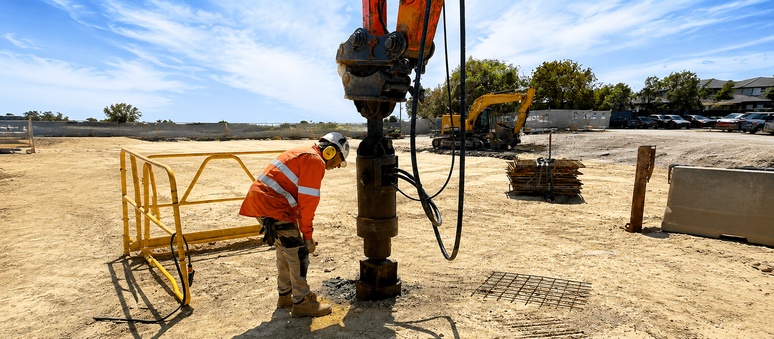
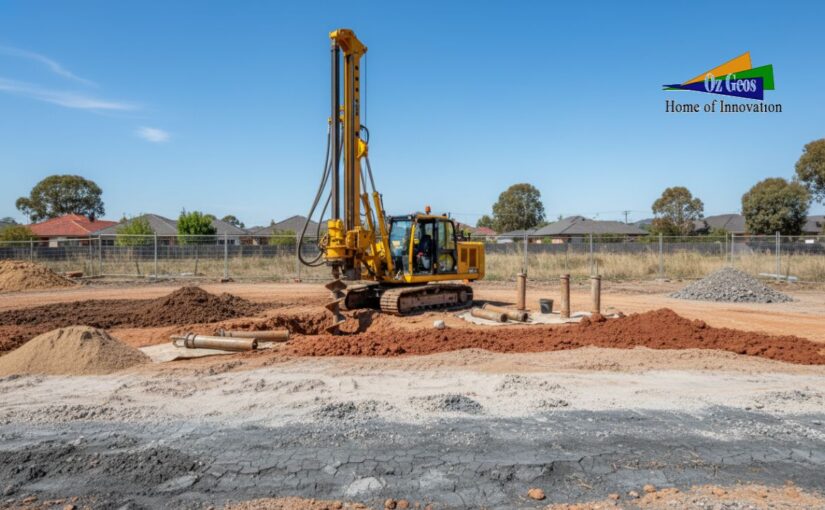
We drill boreholes to collect soil samples at various depths. These samples reveal the type of soil layers present beneath the surface. - Laboratory Testing
Collected samples undergo comprehensive testing, including:
- Atterberg Limits
- Shrink-Swell Index
- Moisture Content
- Particle Size Distribution
- Atterberg Limits
- Soil Profile and Moisture Assessment
We analyse data to evaluate soil reactivity, moisture variation, and the potential for ground movement. - Report and Recommendations
We provide a detailed geotechnical report with the site classification, test results, and professional recommendations for foundation design, site preparation, and drainage management.
Why Choose OzGeos for Site Classification in Melbourne
✅ Accurate and AS 2870-Compliant Reports
All our site classification reports comply with Australian Standards, ensuring full acceptance by engineers, builders, and local councils.
✅ Experienced Local Engineers
We have extensive experience working across Melbourne and Victoria’s varied soil conditions — from coastal sands to highly reactive clays.
✅ Fast Turnaround and Reliable Service
We know that timelines matter in construction. OzGeos delivers prompt site investigations and clear, easy-to-understand reports to keep your project moving.
✅ Foundation Design Expertise
Our in-house geotechnical engineers don’t just classify your soil — we also provide custom foundation design recommendations based on your project’s specific conditions.
✅ Trusted by Builders and Developers
OzGeos is a preferred geotechnical partner for numerous residential and commercial builders across Melbourne due to our accuracy, professionalism, and practical solutions.
When Do You Need a Site Classification Report?
You’ll need a site classification report if you are:
- Building a new home or extension
- Developing units or townhouses
- Constructing commercial or industrial structures
- Planning subdivision developments
- Rebuilding after demolition or soil disturbance
Build with Confidence — Trust OzGeos
At OzGeos, we help you build smarter and safer by providing clear, accurate insights into your site’s soil conditions. Our professional site classification services empower you to make informed design decisions — ensuring strong, durable foundations that stand the test of time.
📞 Contact OzGeos today for expert site classification and soil testing services in Melbourne and across Victoria.
Build on knowledge. Build with confidence.